
Pull-Up Training Program: A Comprehensive Guide
This comprehensive six-week program, designed for all levels, focuses on specificity and progressive overload․ It’s ideal for those striving for their first pull-up or enhancing existing strength․
Understanding the Importance of Pull-Ups
Pull-ups are a cornerstone of upper body strength, functioning as a fantastic overall marker of physical capability․ They engage multiple muscle groups simultaneously – back, shoulders, biceps, and core – promoting functional strength crucial for everyday activities and athletic performance․ Unlike machine-based exercises, pull-ups require you to move your entire bodyweight, fostering a greater degree of real-world strength and stability․
Mastering the pull-up isn’t merely about aesthetics; it’s about building a foundation of strength that translates to improved posture, reduced risk of injury, and enhanced athletic prowess․ Many find achieving their first pull-up challenging, highlighting the need for a structured program․ A well-designed program, like the one outlined, addresses the necessary strength deficits and progressively builds the capacity to perform unassisted pull-ups․ It’s a testament to dedication and a powerful indicator of overall fitness․
Specificity and Progressive Overload in Pull-Up Training
Two key principles underpin effective pull-up training: specificity and progressive overload․ Specificity dictates that training should directly mimic the desired outcome – in this case, performing pull-ups․ Therefore, the program prioritizes pull-up progressions and variations, ensuring energy expenditure is focused on the bar and the movements required for success․ Avoiding excessive work on unrelated exercises is crucial․
Progressive overload involves gradually increasing the demands placed on your muscles over time․ This can be achieved by increasing repetitions, sets, or resistance (through weighted pull-ups)․ The program’s phased approach embodies this principle, starting with foundational exercises like negatives and assisted pull-ups, then progressing to unassisted variations․ Consistent, incremental challenges are vital for continued improvement․ Without these principles, plateaus are common, and achieving your pull-up goals becomes significantly harder․
Phase 1: Building a Foundation (Weeks 1-2)
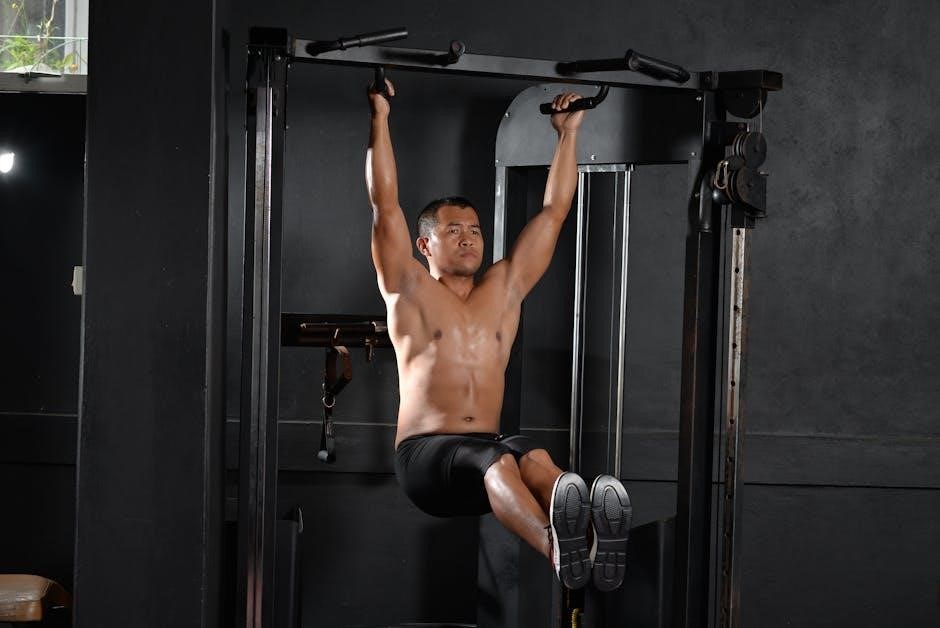
This initial phase focuses on establishing a base strength․ It incorporates negative pull-ups, assisted variations, inverted rows, and dead hangs to prepare your body for more challenging exercises․
Negative Pull-Ups: Mastering the Descent
Negative pull-ups are crucial for building the necessary strength for a full pull-up, especially for beginners․ This exercise emphasizes the eccentric phase – the lowering portion – of the movement․ Start at the top of the pull-up position, whether using a box or jumping to get there, with your chin over the bar․
Then, slowly and with controlled movement, lower yourself down to a full hang․ Focus on resisting gravity and taking as long as possible – ideally 3-5 seconds – during the descent․ This controlled lowering builds strength in the same muscles used during the pull-up, but with reduced demand․ Aim for 3-5 sets of 3-5 repetitions, prioritizing a slow, deliberate descent over the number of reps․ Remember, the slower the descent, the more effective the exercise․ This technique allows you to experience the full range of motion and build strength even if you can’t yet perform a full pull-up․
Assisted Pull-Ups: Utilizing Bands or Machines
Assisted pull-ups are an excellent stepping stone towards unassisted pull-ups, providing support during the concentric (lifting) phase․ Resistance bands are a versatile and affordable option․ Loop a band around the pull-up bar and place your foot or knee inside the loop․ The band provides upward assistance, reducing your body weight․ Choose a band that allows you to perform 8-12 repetitions with good form․
Alternatively, assisted pull-up machines offer a controlled level of assistance․ Adjust the weight stack to provide the appropriate support, allowing you to complete the movement with proper technique․ Focus on engaging your back muscles and maintaining a controlled tempo throughout the exercise․ Perform 3-4 sets of 8-12 repetitions, gradually decreasing the assistance as your strength improves․ This method builds strength and confidence, preparing you for unassisted pull-ups․
Inverted Rows: Strengthening the Back Muscles
Inverted rows are a fantastic horizontal pulling exercise that builds back strength crucial for pull-ups․ Set up a barbell in a power rack or use a sturdy table․ Lie underneath, grasping the bar with an overhand grip, slightly wider than shoulder-width․ Your body should form a straight line from head to heels․ Pull your chest towards the bar, squeezing your shoulder blades together, and then slowly lower yourself back down․
Adjust the bar height to modify the difficulty – a lower bar increases the challenge․ Beginners can start with a higher bar and a more upright body position․ Aim for 3-4 sets of 8-12 repetitions, focusing on controlled movements and proper form․ This exercise strengthens the lats, rhomboids, and traps, all essential muscles for performing pull-ups․ Inverted rows are a great alternative if you can’t yet perform a pull-up․
Dead Hangs: Increasing Grip Strength and Shoulder Stability
Dead hangs are a simple yet effective exercise for improving grip strength and shoulder stability – both vital for successful pull-ups․ Simply hang from a pull-up bar with an overhand grip, ensuring your arms are fully extended․ Focus on maintaining a relaxed grip, avoiding excessive tension․ Engage your shoulders by slightly retracting your scapula (shoulder blades) to promote stability․
Start with shorter hangs of 15-30 seconds and gradually increase the duration as your grip strength improves․ Aim for 3-5 sets, resting briefly between each hang․ Dead hangs help strengthen the forearm muscles, tendons, and ligaments, preparing them for the demands of pull-ups․ They also improve shoulder joint health and range of motion, reducing the risk of injury․ Consistent practice will yield noticeable improvements․

Phase 2: Increasing Strength and Endurance (Weeks 3-4)
This phase transitions towards unassisted pull-ups, incorporating lat pulldowns and progressions․ Focus shifts to building both strength and the endurance needed for multiple repetitions․
Transitioning to Unassisted Pull-Ups
The core goal of this stage is to bridge the gap between assisted variations and performing full, unassisted pull-ups․ This requires a deliberate reduction in assistance, whether from resistance bands or assisted pull-up machines․ Begin by selecting a band that provides noticeable support but allows for a challenging range of motion․
Focus on maintaining proper form throughout each repetition – a full extension at the bottom and a controlled ascent until your chin clears the bar․ Gradually decrease the band’s assistance as your strength improves, or reduce the weight on the assisted pull-up machine․
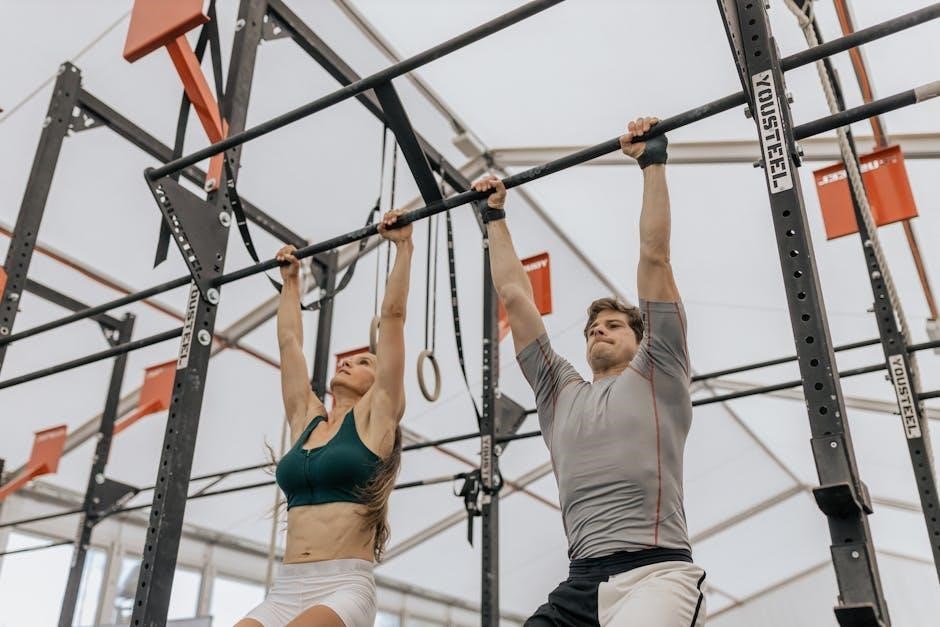
Supplement this with negative pull-ups, emphasizing a slow, controlled descent․ If you can’t yet perform a single unassisted pull-up, aim for 3 sets of 3-5 repetitions with a 3-5 second negative phase․ Remember, specificity is key; consistently practicing the pull-up movement pattern is crucial for success․ Listen to your body and adjust the intensity as needed to avoid overtraining․
Lat Pulldowns: Simulating the Pull-Up Motion
Lat pulldowns serve as an excellent alternative and preparatory exercise for pull-ups, effectively mimicking the movement pattern․ Utilizing a lat pulldown machine allows you to build the necessary back and arm strength without the full bodyweight demand of a pull-up․ Focus on maintaining a controlled motion throughout the exercise, avoiding swinging or using momentum․
Adjust the weight to a level that challenges you while allowing for proper form․ Pull the bar down towards your upper chest, squeezing your shoulder blades together․ Maintain a slight lean back and keep your core engaged․
Experiment with different grip widths – wider grips emphasize the lats, while narrower grips engage the biceps more․ Incorporate 3-4 sets of 8-12 repetitions into your routine․ This exercise is particularly beneficial for those still building the foundational strength required for unassisted pull-ups, providing a scalable and effective training tool․
Pull-Up Progressions: Variations for Different Levels
Progressing towards unassisted pull-ups requires a strategic approach, utilizing variations tailored to your current strength level․ Beyond assisted pull-ups, explore eccentric-focused training – slowly lowering yourself from the top position of a pull-up, even if you can’t initiate the upward movement․ This builds crucial negative strength․
Scapular pull-ups, focusing on engaging the back muscles without bending the elbows, enhance shoulder stability and activation․ For a slight challenge, try archer pull-ups, pulling towards one hand while keeping the other extended․
As strength increases, incorporate jumping pull-ups, using a small jump to initiate the movement․ Gradually reduce the jump height as you gain control․ Remember to prioritize proper form over quantity, ensuring each repetition is executed with control and full range of motion․ These variations provide a pathway to mastering the full pull-up․
Circuit Training for Pull-Up Development
Integrating circuit training is a highly effective method for building both strength and endurance crucial for pull-up success․ A sample circuit might include exercises like lat pulldowns, inverted rows, dumbbell rows, and dead hangs, performed consecutively with minimal rest between exercises․
Complete the circuit 3-4 times, resting 60-90 seconds between each round․ This approach challenges multiple muscle groups, mimicking the demands of a pull-up․ Vary the exercises weekly to prevent plateaus and maintain engagement․
Focus on maintaining proper form throughout the circuit, even as fatigue sets in․ Adjust the weight or resistance to ensure you can complete each exercise with good technique․ Circuit training not only builds strength but also improves cardiovascular fitness and work capacity, enhancing overall performance․
Phase 3: Advanced Techniques and Refinement (Weeks 5-6)
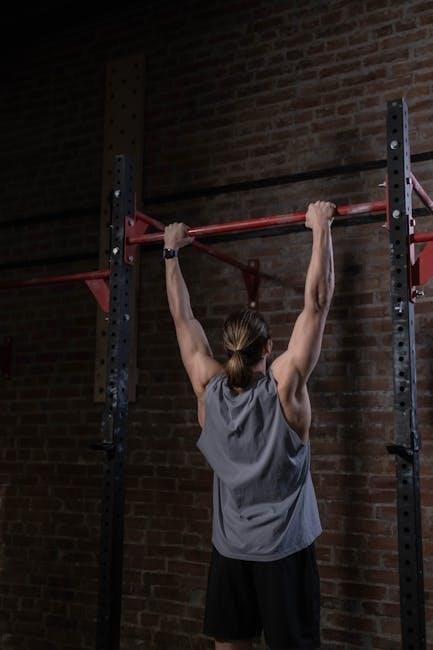
This phase focuses on maximizing pull-up performance through increased volume, weighted variations, and explosive movements․ Refine technique and expand your repertoire for continued progress․
Increasing Pull-Up Volume and Intensity
As you progress into Weeks 5 and 6, the focus shifts towards challenging your muscles with greater demands․ This involves strategically increasing both the number of repetitions performed per set and the overall number of sets completed during each workout session․ Don’t simply add reps haphazardly; a controlled increase is key to avoiding plateaus and minimizing the risk of injury․
Consider implementing a system where you aim to add one or two repetitions to each set each week, provided your form remains impeccable․ If you find yourself struggling to maintain proper technique, it’s better to maintain the current volume rather than sacrificing form for a few extra reps․ Intensity can also be boosted by shortening rest periods between sets, forcing your muscles to work harder with less recovery time․
Remember, the goal isn’t just to do more pull-ups, but to do them well․ Prioritize quality over quantity, and listen to your body․ Proper form ensures that you’re effectively targeting the intended muscle groups and maximizing the benefits of each repetition․ This phase is about pushing your limits safely and efficiently․
Weighted Pull-Ups: Adding Resistance
Once you can consistently perform a significant number of unassisted pull-ups with excellent form, it’s time to introduce external resistance․ Weighted pull-ups are a highly effective method for continuing to challenge your muscles and promote further strength gains․ This can be achieved using a weight belt designed for this purpose, or by holding a dumbbell between your feet․
Start with a small amount of weight – perhaps 2․5 to 5 pounds – and gradually increase the load as you become stronger․ It’s crucial to maintain proper form throughout the exercise; avoid swinging or using momentum to complete the repetitions․ Focus on controlled movements, engaging your back and arm muscles to lift your body weight plus the added resistance․
Adding weight forces your muscles to work harder, stimulating greater muscle fiber recruitment and promoting hypertrophy․ Remember to adjust the weight based on your individual strength level and progress․ Prioritize form and controlled movements over lifting the heaviest possible weight․
Explosive Pull-Ups: Developing Power

Beyond building strength, developing power is crucial for athletic performance and functional fitness․ Explosive pull-ups, also known as plyometric pull-ups, focus on generating maximum force in a short amount of time․ These aren’t about simply pulling yourself up quickly; they involve actively driving your chest towards the bar with force․
Begin by performing a standard pull-up, but as you ascend, focus on initiating a powerful upward burst․ Aim to pull yourself high enough that your chest briefly breaks the plane of the bar․ Control the descent, resisting gravity as much as possible․ This eccentric phase is just as important as the explosive concentric phase․
Start with a lower volume of explosive pull-ups, as they are more taxing on the nervous system․ Focus on quality over quantity, ensuring each repetition is performed with maximum effort and control․ Incorporating these into your routine will enhance your overall pulling power and athleticism․
Pull-Up Variations: Expanding Your Repertoire
Once you’ve mastered the standard pull-up, diversifying your training with variations is key to continued progress and preventing plateaus․ Different grips and hand positions target different muscle groups, leading to more well-rounded development․ Wide-grip pull-ups emphasize the lats, creating a broader back, while close-grip pull-ups focus more on the biceps and lower lats․
Neutral-grip pull-ups, performed with palms facing each other, are a great option for those with shoulder issues or limited wrist mobility․ Chin-ups, with an underhand grip, are generally easier than pull-ups and heavily engage the biceps․ Consider incorporating commando pull-ups, where you pull towards alternating elbows, for a unique challenge․
Experimenting with these variations not only builds strength but also improves grip strength and overall body awareness․ Regularly rotating through different variations will keep your workouts engaging and maximize your results․

Program Considerations
Success requires a holistic approach․ Prioritize proper warm-ups, cool-downs, and sufficient rest for recovery․ Nutrition plays a vital role in muscle growth and strength gains․
Warm-up and Cool-down Routines
Prior to each pull-up session, a dynamic warm-up is crucial․ Begin with five minutes of light cardio, such as jumping jacks or arm circles, to increase blood flow․ Follow this with specific movements targeting the muscles used in pull-ups․
Include shoulder rotations (forward and backward), scapular retractions, and arm swings․ Dynamic stretching, like arm crosses and torso twists, prepares the muscles for exertion․ A proper warm-up minimizes injury risk and maximizes performance․
After your workout, a cool-down is equally important․ Start with five minutes of light cardio to gradually lower your heart rate․ Then, perform static stretches, holding each stretch for 20-30 seconds․ Focus on stretching the lats, biceps, and shoulders․ Examples include lat stretches, bicep stretches, and cross-body shoulder stretches․ Cooling down aids in muscle recovery and reduces soreness․
Remember to listen to your body and adjust the warm-up and cool-down routines as needed․ Consistency with these routines will contribute significantly to your overall progress and well-being․
Rest and Recovery Strategies
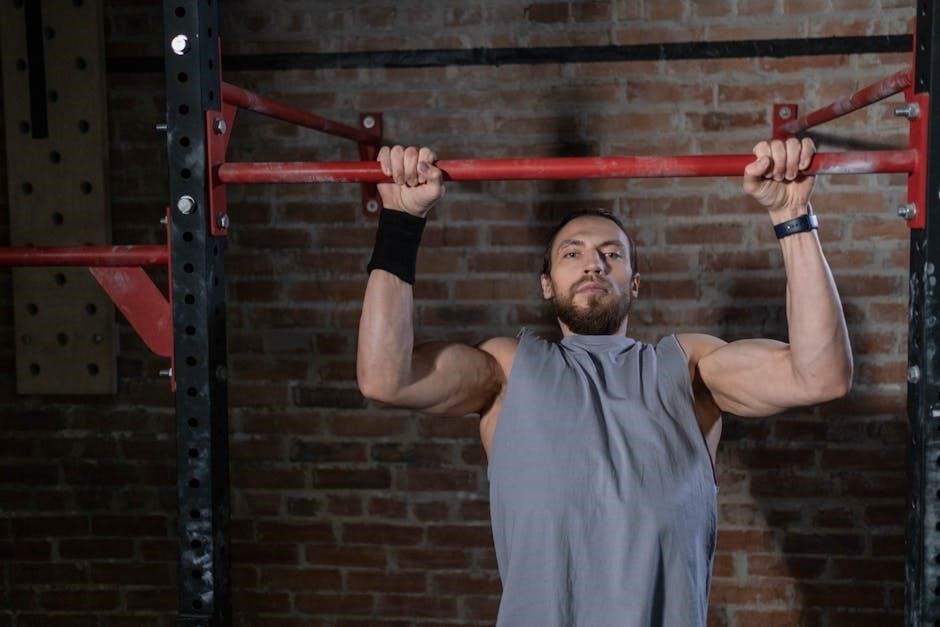
Adequate rest is paramount for muscle repair and growth following pull-up training․ Allow at least 48-72 hours of rest between pull-up sessions targeting the same muscle groups․ Overtraining can lead to plateaus and increased injury risk․ Prioritize 7-9 hours of quality sleep each night to optimize recovery processes․

Active recovery, such as light cardio or stretching, can enhance blood flow and reduce muscle soreness․ Consider incorporating foam rolling or massage to release muscle tension․ Proper hydration is also crucial; drink plenty of water throughout the day to support muscle function and recovery․

Listen to your body and don’t push through pain․ If you experience persistent soreness or discomfort, take a rest day or consult with a healthcare professional․ Strategic deload weeks, where you reduce training volume and intensity, can prevent burnout and promote long-term progress․ Effective recovery is just as important as the training itself․
Nutrition for Muscle Growth and Strength
Optimal nutrition is fundamental for supporting muscle growth and maximizing the benefits of your pull-up training program․ Prioritize a diet rich in protein, consuming approximately 0․8-1 gram of protein per pound of body weight daily․ Good sources include lean meats, poultry, fish, eggs, and plant-based proteins like beans and lentils․
Carbohydrates provide the energy needed for intense workouts, so include complex carbs like whole grains, fruits, and vegetables in your diet․ Healthy fats are also essential for hormone production and overall health; opt for sources like avocados, nuts, and olive oil․
Timing your nutrient intake can further enhance recovery and muscle growth․ Consume a protein-rich meal or snack within an hour after your workout․ Ensure adequate calorie intake to support muscle building, and stay hydrated by drinking plenty of water throughout the day․
Troubleshooting Common Challenges
Plateaus are common in any strength training program, including pull-up progression․ If you’re stuck, reassess your form and ensure proper technique․ Consider adjusting your training volume or intensity – perhaps adding weight or modifying progressions․ Don’t underestimate the importance of deload weeks, incorporating lighter training to allow for recovery․
Grip strength can be a limiting factor; dedicate time to grip-specific exercises like dead hangs and farmer’s walks․ Shoulder pain often arises from improper form or insufficient warm-up․ Prioritize a thorough warm-up and focus on controlled movements․ If pain persists, consult a healthcare professional․
Motivation can wane; set realistic goals, track your progress, and find a training partner for accountability․ Remember consistency is key, and celebrate small victories along the way․